
SUNDAY 19 JULY 2026
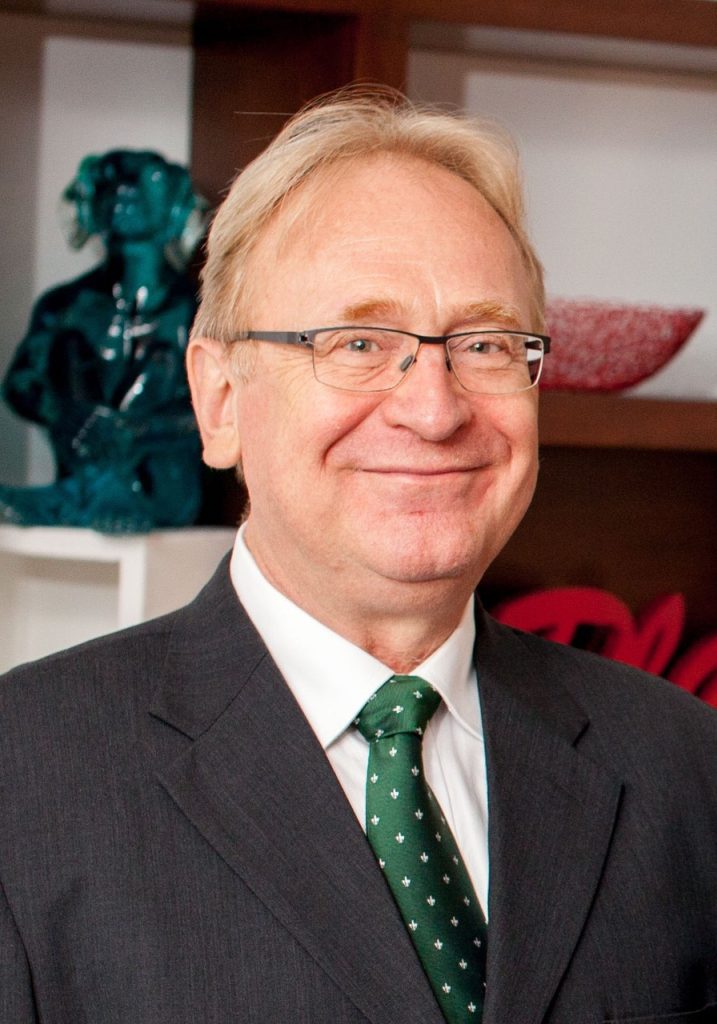
TALK BY PROFESSOR PETER ROENNFELDT
WAGNER AND SCHUMANN – PARALLELS AND MUTUAL INFLUENCES
Sunday 19 July 2026
12.00 noon:
DVD – Tony Palmer’s Wagner Part 3
2.00pm:
Talk by Professor Peter Roennfeldt on Wagner and Schumann – Parallels and Mutual Influences
Venue:
Goethe Institut
Event Hall (upstairs)
90 Ocean Street (cnr Jersey Road)
Woollahra NSW
Tickets:
Members $35, Non-members $45, full-time students $15
ABOUT PROFESSOR PETER ROENNFELDT
Emeritus Professor Peter Roennfeldt lectured in music history for over three decades at the Queensland Conservatorium Griffith University, where for seven years he also served as its Director. He performs mostly with period instruments, including directing baroque vocal ensembles from the harpsichord, and chamber music of Schumann and contemporaries featuring his 1843 Streicher piano. Peter’s primary research focus on the musical development of Queensland has been published in seven books, thirty articles and numerous papers. He is also active as a guest speaker and presenter of historically-themed radio programs for Brisbane’s 4MBS FM. For more information see: www.peterroennfeldt.com
ABOUT THE TALK
The careers of Richard Wagner and Robert Schumann were remarkably interlinked during the 1840s. Due to Schumann’s early death and Wagner’s reticence to acknowledge their relationship, this connection has only recently been fully examined. There were mutual influences during the genesis of Schumann’s Genoveva and Wagner’s Lohengrin, both of which were completed in 1848 and premiered in 1850. There is also an afterglow of Schumann’s influence in Tristan, and Wagnerian tinges in some late Schumann works. Peter Roennfeldt will discuss the many crossover points and coincidences in the careers of Schumann and Wagner, and their mutual observations of each other’s personality and output.
ABOUT TONY PALMER’S WAGNER
This epic film – described by Richard Hornak in Opera News as “one of the most beautifu motion pictures in history” – was originally made in 1982/3 by Tony Palmer to celebrate the 100th anniversary of Wagner’s death. His 2011 restoration of the 1983 miniseries Wagner is a comprehensive, high-definition, and widescreen edition of the epic film, originally released on DVD in July 2011. The restoration restores the film to its original, full, intended length, spanning over 460 minutes, with the soundtrack featuring Wagner’s music conducted by Sir Georg Solti.
SYNOPSIS OF WAGNER PART 3
Wagner moves to Venice to finish Tristan und Isolde. When Karl Ritter informs him that Mrs Ritter is no longer able to provide Wagner with money, he ends their friendship and travels to Paris. There, he is ordered by the French emperor Napoleon III to stage a new version of his famous opera Tannhäuser. However, the show is a fiasco and riots break out during the performance. For artistic (Wagner insisted on having a ballet in the first act, instead of the second, as it was customary) and political reasons (the involvement of one of Wagner’s patrons, the Austrian Princess Metternich, was exploited to protest against the pro-Austrian policies of the French emperor). Moreover, shortly before the performance, Wagner has a dispute with the Jewish composer Giacomo Meyerbeer about his antisemitic essay Das Judenthum in der Musik.