
SUNDAY 21 JUNE 2026
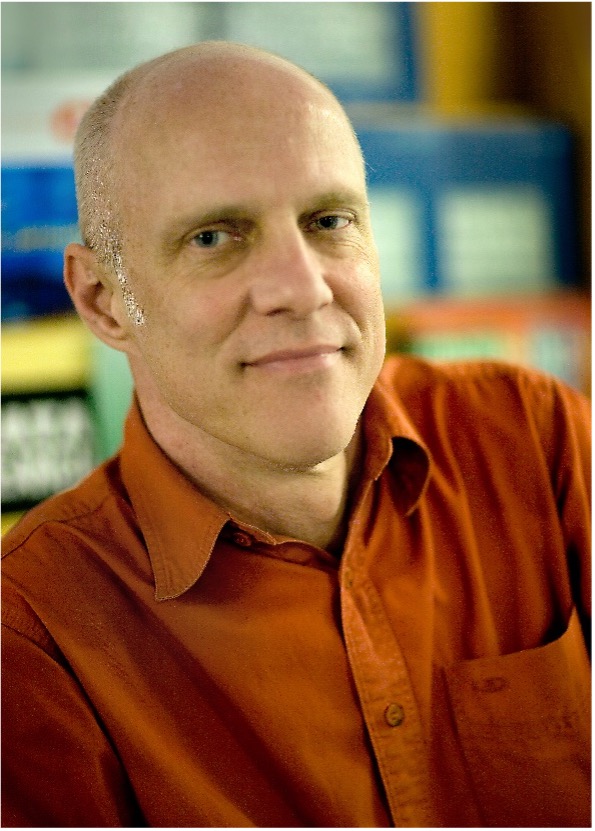
PRESENTATION BY DR CHRIS SORRELL
EARLY WAGNER RECORDINGS ON CYLINDER & DISK
Sunday 21 June 2026
12.00 noon:
DVD – Tony Palmer’s Wagner Part 2
2.00pm:
Presentation by Dr Chris Sorrell – Early Wagner recordings on cylinder & disk
Venue:
Goethe Institut
Event Hall (upstairs)
90 Ocean Street (cnr Jersey Road)
Woollahra NSW
Tickets:
Members $35, Non-members $45, full-time students $15
Program
Presentation slides – part 1
Presentation slides – part 2
A memento
Photo gallery
ABOUT DR CHRIS SORRELL
Charles C (Chris) Sorrell is a senior academic staff member of the School of Materials Science and Engineering, UNSW Sydney (formerly University of New South Wales), which he joined in 1987. He has been the Professor of Ceramic Engineering since 1997. While his professional expertise is limited largely to ceramic materials, his personal passions always have been art and music. In art he has specialised in the print arts of the French Etching Revival, having completed or nearly completed catalogues raisonnés of Edgar Chahine (Armenian/French, 1873-1947), Gabrielle Niel (French, 1831-1919), and Georges Rubel (French, 1945-). He began collecting mechanical musical instruments and recordings when he was a teenager in the US Midwest. When he came to Australia to begin his PhD in 1981, he formed a second smaller collection in Sydney.
ABOUT CHRIS’ PRESENTATION
Chris will be bringing two Edison cylinder players, one a portable model Gem with small metal horn (the beat box of the day) and the other the ne plus ultra of cylinder players, the all-mahogany model Concert. He will bring a number of Edison 4-minute celluloid cylinders featuring acoustic recordings of Wagner’s music. Excerpts from Tannhäuser, Lohengrin, Die Meistersinger, and Rienzi will be played. Of the arias, the featured singers include Fritz Feinhals (German, 1869-1940), Jacques Urlus (Dutch, 1867-1935), Marie Rappold (USA, 1872-1957), and Thomas Chalmers (USA, 1884-1966). There also will be transcriptions from the operas for violin and brass band (a lesser evil owing to the frequency limitations of acoustic recordings). He will bring some other cylinders of some interest, including the famous direct acoustic recording of Verdi’s La Donna è Mobile from Rigoletto by Alessandro Bonci (Italian, 1870-1940), who was the only rival to Caruso in his day for his bel canto technique. Of Australian interest is a recording of the Toreador Song from Bizet’s Carmen, performed by Peter Dawson, who recorded prolifically for Edison.
He will play some of the cylinders on both instruments in order to highlight their significantly different sound qualities. The Model D maroon Gem was Edison’s entry-level instrument; it was manufactured during 1908-1912 and sold for US$15.00 (today, US$500). The Concert was for serious music lovers with serious money; it was manufactured during 1911-1913 and cost US$90.00-100.00 (today, US$3,100-3,300). He also will play different cylinders in order to highlight the more subtle differences between the common domestic 4-minute cylinders (1,500-5,000 series), produced during 1912-1929 and costing US$0.35-0.50, and the more refined concert cylinders (28,000 series), produced during 1912-1918 and costing US$0.75-1.00.
Finally, courtesy of Eric Lange (formerly of Lobster Films), Versailles, there will be an audio-visual treat. The Mendel Cinémato-Gramo-Théâtre and the Gaumont Chronophone (both introduced 1906) were two of the earliest attempts to marry film and sound, using a 35 mm projector integrated with a separate compressed-air acoustic disk player. Eric has sought out these rare films and disk records and then used computer magic to create film clips of the performances. The two that he has sent are the Sextette from Donizetti’s Lucia di Lammermoor (Mendel, 1908) and the Air du Toréador from Bizet’s Carmen (Gaumont, 1910). While the singers of the former are uncredited, the latter is special because, while actors mouthed the words, this actually is Caruso’s recording of the aria.
Prior to playing these cylinders, he will give a brief outline of the history of recorded sound, including a broad history of cylinder and disk recordings of Wagner’s music. While the cylinders are playing, a PowerPoint presentation will screen soundlessly, showing relevant images of the art, technology, and history of early recorded sound.
ABOUT TONY PALMER’S WAGNER
This epic film – described by Richard Hornak in Opera News as “one of the most beautiful motion pictures in history” – was originally made in 1982/3 by Tony Palmer to celebrate the 100th anniversary of Wagner’s death. His 2011 restoration of the 1983 miniseries Wagner is a comprehensive, high-definition, and widescreen edition of the epic film, originally released on DVD in July 2011. The restoration restores the film to its original, full, intended length, spanning over 460 minutes, with the soundtrack featuring Wagner’s music conducted by Sir Georg Solti.
SYNOPSIS OF WAGNER PART 2
In the 1850s, Wagner’s health deteriorates and he has to be cured in a sanatorium, where he reads Arthur Schopenhauer’s work Die Welt als Wille und Vorstellung. At his return, Mathilde Wesendonck, the wife of wealthy silk merchant Otto Wesendonck, becomes yet another one of his patrons and offers him the cottage on her estate as his residence. Once installed in the cottage, Wagner begins a passionate correspondence with Mathilde, which upsets both Mathilde’s husband, Otto, and Wagner’s wife, Minna, who seeks solace in increasing amounts of laudanum. Wagner, who starts composing Tristan und Isolde for Mathilde, is also visited by his good friend Hans von Bülow, and his new bride Cosima, Liszt’s daughter. After a while, Minna works up the courage to confront Wagner and Mathilde about their correspondence.